
Practical guides for Canada
Guidebooks on Amazon
Plain-language immigration guidebooks by Sean G McKinsley and Kimberly J White, Regulated Canadian Immigration Consultants (RCICs). Read a short excerpt and the table of contents for each book, then check it on Amazon.
Books are general information, not legal advice, and do not guarantee any immigration outcome. Program rules change often, so check the information date in each book.
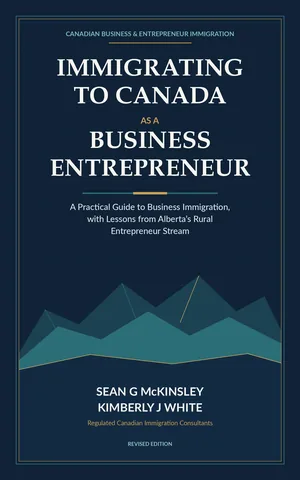
2026 revised edition
Immigrating to Canada as a Business Entrepreneur
A Practical Guide to Business Immigration, with Lessons from Alberta’s Rural Entrepreneur Stream
Moving to Canada through a business requires two viable plans: a plan for the enterprise and a plan for the family's immigration status. They must work together. Incorporating a company, buying shares, obtaining a municipal licence or receiving a community's encouragement does not, by itself, authorize work or establish eligibility for permanent residence.
Table of contents preview
- Before you begin
- 1. Start with the route, the person and the business
- 2. What has changed since the original guide
- 3. Significant benefit and provincial business work permits
- 4. Intra-company transfers and international expansion
- 5. The provincial and territorial landscape
- 6. Alberta Rural Entrepreneur: eligibility and economic establishment
- 7. Community engagement and support letters
- 8. The business plan: Qualified Service Provider (QSP) evaluation and AAIP officer review
- 9. Funds, transactions and the Business Application
- 10. A realistic timeline and cost plan
- 11. Running the business and proving performance
- 12. Officer questions, procedural fairness and adverse decisions
- 13. Family settlement, professional support and the UK perspective
- Appendices A to I: working tools, rural communities, verifying a consultant or lawyer, NOC and Express Entry, glossary, legal framework, IRCC and CBSA records, reconsideration and judicial review
- Your next step
- Official sources and further reading
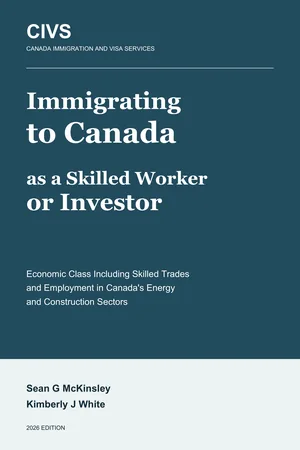
2026 edition
Immigrating to Canada as a Skilled Worker or Investor
Economic Class Including Skilled Trades and Employment in Canada's Energy and Construction Sectors
Moving to Canada through business or skilled work brings several decisions together. You need a place where your skills or enterprise can earn a living, a lawful route to work and remain, and a household plan that can survive delays. This book helps experienced business owners, managers, tradespeople and their families put those decisions in a workable order.
Table of contents preview
- 1. Choosing a future you can support
- 2. Finding economic opportunity
- 3. Alberta jobs and trade preparation
- 4. Temporary work and the family
- 5. Permanent residence through skilled employment
- 6. Understanding entrepreneur selection
- 7. Comparing provinces and territories
- 9. Rural entrepreneurship in Alberta
- 10. Deciding whether to buy or start
- 11. Investigating the business before committing
- 12. Building a complete financial plan
- 13. Writing a plan that can be operated
- 14. Making the family move workable
- 15. Running the business and proving performance
- 16. Protecting status while pursuing residence
- 17. Practical lessons for business and immigration decisions
- 18. A ninety-day preparation plan
- 19. Questions and worksheets for the next decision
- Glossary
- About the Authors
- Source notes
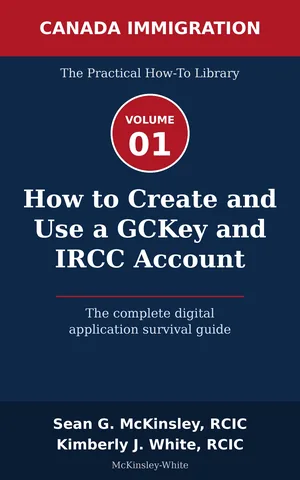
Volume 1 · Canada Immigration: The Practical How-To Library
How to Create and Use a GCKey and IRCC Account
The complete digital application survival guide
For readers preparing to use the IRCC secure account, the IRCC Portal, the Permanent Residence Portal, citizenship applications or representative access. These are different systems, not interchangeable names. This book is a working companion. You can read it straight through, but you will learn more by applying each chapter to your own documentation.
Table of contents preview
- Part I — Seven decisions that make an application work
- Chapter 1. Choose the correct application portal
- Chapter 2. Create a secure sign-in
- Chapter 3. Start the right application
- Chapter 4. Build the upload workspace
- Chapter 5. Assign representative and family roles
- Chapter 6. Review before payment
- Chapter 7. Capture and monitor submission
- Part II — The evidence workshop
- Part III — Preventable refusals, delays and losses of status
- Part IV — An anonymized practice exercise
- Part V — Which forms might apply?
- Part VI — Frequently asked questions
- Part VII — The submission and follow-up audit
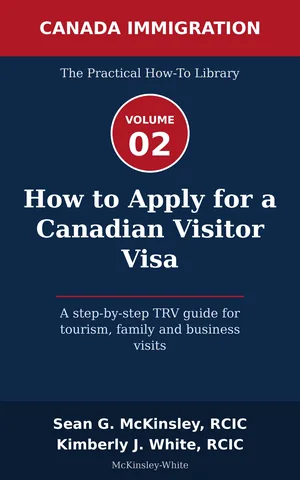
Volume 2 · Canada Immigration: The Practical How-To Library
How to Apply for a Canadian Visitor Visa
A step-by-step TRV guide for tourism, family and business visits
For visa-required visitors applying outside Canada or otherwise directed by IRCC to a visitor-visa process; a visitor visa permits travel to seek entry, not a guaranteed right to enter or work. This book is a working companion. You can read it straight through, but you will learn more by applying each chapter to your own documentation.
Table of contents preview
- Part I — Seven decisions that make an application work
- Chapter 1. Define the genuine visit
- Chapter 2. Check visa versus eTA and eligibility
- Chapter 3. Open the directed portal
- Chapter 4. Document funds and home ties
- Chapter 5. Prepare invitation and itinerary
- Chapter 6. Complete forms and declarations
- Chapter 7. Submit and plan travel only after a decision
- Part II — The evidence workshop
- Part III — Preventable refusals, delays and losses of status
- Part IV — An anonymized practice exercise
- Part V — Which forms might apply?
- Part VI — Frequently asked questions
- Part VII — The submission and follow-up audit
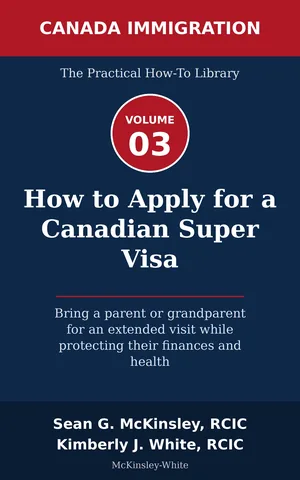
Volume 3 · Canada Immigration: The Practical How-To Library
How to Apply for a Canadian Super Visa
Bring a parent or grandparent for an extended visit while protecting their finances and health
For eligible parents and grandparents seeking a longer Canadian visit; the super visa is distinct from an ordinary visitor visa and from permanent residence sponsorship. This book is a working companion. You can read it straight through, but you will learn more by applying each chapter to your own documentation.
Table of contents preview
- Part I — Seven decisions that make an application work
- Chapter 1. Confirm the family relationship and host
- Chapter 2. Calculate the host's income
- Chapter 3. Plan private medical insurance
- Chapter 4. Arrange immigration medical examination
- Chapter 5. Write a careful invitation
- Chapter 6. Apply using the right online channel
- Chapter 7. Prepare for entry and ongoing coverage
- Part II — The evidence workshop
- Part III — Preventable refusals, delays and losses of status
- Part IV — An anonymized practice exercise
- Part V — Which forms might apply?
- Part VI — Frequently asked questions
- Part VII — The submission and follow-up audit
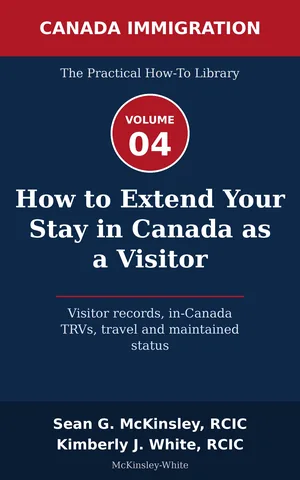
Volume 4 · Canada Immigration: The Practical How-To Library
How to Extend Your Stay in Canada as a Visitor
Visitor records, in-Canada TRVs, travel and maintained status
For visitors seeking more time in Canada and workers or students considering a separate TRV. A visitor record is a status document and is not the same as a visitor visa in a passport. This book is a working companion.
Table of contents preview
- Part I — Seven decisions that make an application work
- Chapter 1. Identify the document you actually need
- Chapter 2. Check timing and status
- Chapter 3. Describe the requested extension
- Chapter 4. Complete in-Canada questionnaire
- Chapter 5. Prepare supporting documents
- Chapter 6. Submit and preserve confirmation
- Chapter 7. Handle travel and final decision
- Part II — The evidence workshop
- Part III — Preventable refusals, delays and losses of status
- Part IV — An anonymized practice exercise
- Part V — Which forms might apply?
- Part VI — Frequently asked questions
- Part VII — The submission and follow-up audit
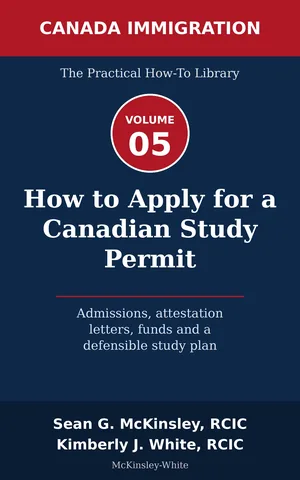
Volume 5 · Canada Immigration: The Practical How-To Library
How to Apply for a Canadian Study Permit
Admissions, attestation letters, funds and a defensible study plan
For prospective international students preparing an initial study-permit application, including accompanied family members and students whose province may have separate requirements. This book is a working companion. You can read it straight through, but you will learn more by applying each chapter to your own documentation.
Table of contents preview
- Part I — Seven decisions that make an application work
- Chapter 1. Verify institution and program
- Chapter 2. Determine the attestation requirement
- Chapter 3. Prepare tuition and living-cost plan
- Chapter 4. Write the study rationale
- Chapter 5. Build identity and family records
- Chapter 6. Submit with the right online workflow
- Chapter 7. Plan conditions after approval
- Part II — The evidence workshop
- Part III — Preventable refusals, delays and losses of status
- Part IV — An anonymized practice exercise
- Part V — Which forms might apply?
- Part VI — Frequently asked questions
- Part VII — The submission and follow-up audit
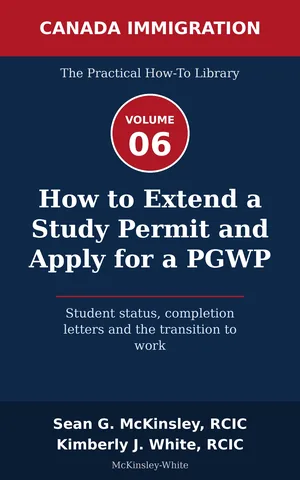
Volume 6 · Canada Immigration: The Practical How-To Library
How to Extend a Study Permit and Apply for a PGWP
Student status, completion letters and the transition to work
For students in Canada and recent graduates who need to preserve legal status or assess post-graduation work-permit eligibility; requirements differ by institution and program. This book is a working companion. You can read it straight through, but you will learn more by applying each chapter to your own documentation.
Table of contents preview
- Part I — Seven decisions that make an application work
- Chapter 1. Inventory all key dates
- Chapter 2. Check study-permit extension needs
- Chapter 3. Verify PGWP institution and program
- Chapter 4. Assess language and deadline rules
- Chapter 5. Collect proof of academic history
- Chapter 6. Complete the work application
- Chapter 7. Monitor and preserve status
- Part II — The evidence workshop
- Part III — Preventable refusals, delays and losses of status
- Part IV — An anonymized practice exercise
- Part V — Which forms might apply?
- Part VI — Frequently asked questions
- Part VII — The submission and follow-up audit
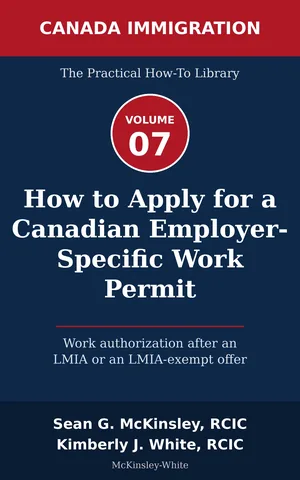
Volume 7 · Canada Immigration: The Practical How-To Library
How to Apply for a Canadian Employer-Specific Work Permit
Work authorization after an LMIA or an LMIA-exempt offer
For workers with an offer of employment; a work permit may depend on a positive LMIA or an LMIA exemption and Employer Portal offer. This guide helps applicants confirm the correct foundation. This book is a working companion. You can read it straight through, but you will learn more by applying each chapter to your own documentation.
Table of contents preview
- Part I — Seven decisions that make an application work
- Chapter 1. Verify the employer and offer
- Chapter 2. Determine LMIA or exemption
- Chapter 3. Check applicant credentials
- Chapter 4. Choose outside- or inside-Canada workflow
- Chapter 5. Assemble identity and status evidence
- Chapter 6. Submit and respond to IRCC
- Chapter 7. Inspect issued conditions
- Part II — The evidence workshop
- Part III — Preventable refusals, delays and losses of status
- Part IV — An anonymized practice exercise
- Part V — Which forms might apply?
- Part VI — Frequently asked questions
- Part VII — The submission and follow-up audit
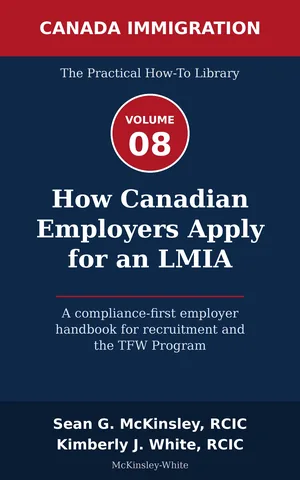
Volume 8 · Canada Immigration: The Practical How-To Library
How Canadian Employers Apply for an LMIA
A compliance-first employer handbook for recruitment and the TFW Program
For legitimate employers considering a Labour Market Impact Assessment, with emphasis on genuine recruitment and records. Not a job-placement or recruitment-fee sales guide. This book is a working companion. You can read it straight through, but you will learn more by applying each chapter to your own documentation.
Table of contents preview
- Part I — Seven decisions that make an application work
- Chapter 1. Define actual hiring need
- Chapter 2. Identify the correct wage stream
- Chapter 3. Design genuine recruitment
- Chapter 4. Build the employer account
- Chapter 5. Prepare supporting business records
- Chapter 6. Submit LMIA Online
- Chapter 7. Manage post-decision compliance
- Part II — The evidence workshop
- Part III — Preventable refusals, delays and losses of status
- Part IV — An anonymized practice exercise
- Part V — Which forms might apply?
- Part VI — Frequently asked questions
- Part VII — The submission and follow-up audit
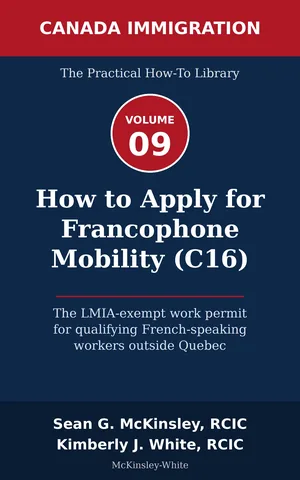
Volume 9 · Canada Immigration: The Practical How-To Library
How to Apply for Francophone Mobility (C16)
The LMIA-exempt work permit for qualifying French-speaking workers outside Quebec
For employers and foreign nationals exploring C16 Mobilité Francophone; the current rule emphasizes intermediate French speaking and listening and qualifying work outside Quebec. This book is a working companion. You can read it straight through, but you will learn more by applying each chapter to your own documentation.
Table of contents preview
- Part I — Seven decisions that make an application work
- Chapter 1. Confirm work location
- Chapter 2. Assess French ability
- Chapter 3. Confirm job and NOC
- Chapter 4. Complete employer portal prerequisites
- Chapter 5. Prepare worker qualification proof
- Chapter 6. Submit work application
- Chapter 7. Travel and inspect authorization
- Part II — The evidence workshop
- Part III — Preventable refusals, delays and losses of status
- Part IV — An anonymized practice exercise
- Part V — Which forms might apply?
- Part VI — Frequently asked questions
- Part VII — The submission and follow-up audit
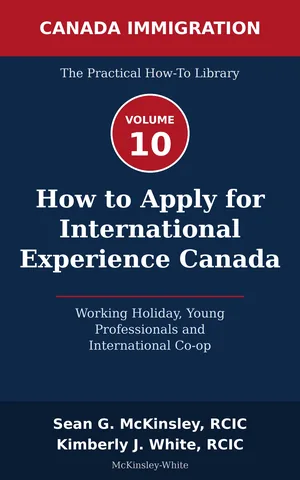
Volume 10 · Canada Immigration: The Practical How-To Library
How to Apply for International Experience Canada
Working Holiday, Young Professionals and International Co-op
For eligible youth from IEC-partner countries and recognized organization pathways. Country-specific ages, repeat-participation rules, invitation windows and quotas must be checked each season. This book is a working companion. You can read it straight through, but you will learn more by applying each chapter to your own documentation.
Table of contents preview
- Part I — Seven decisions that make an application work
- Chapter 1. Check country agreement and age
- Chapter 2. Choose the right IEC pool
- Chapter 3. Create your secure account
- Chapter 4. Wait for an invitation
- Chapter 5. Accept and complete ITA within time
- Chapter 6. Prepare financial and travel records
- Chapter 7. Review issued work authority
- Part II — The evidence workshop
- Part III — Preventable refusals, delays and losses of status
- Part IV — An anonymized practice exercise
- Part V — Which forms might apply?
- Part VI — Frequently asked questions
- Part VII — The submission and follow-up audit
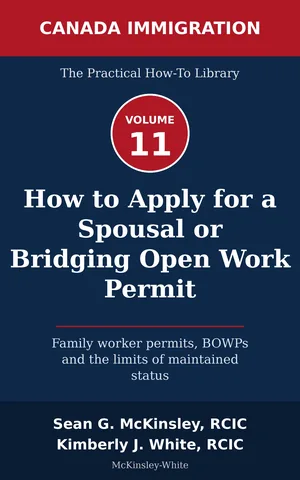
Volume 11 · Canada Immigration: The Practical How-To Library
How to Apply for a Spousal or Bridging Open Work Permit
Family worker permits, BOWPs and the limits of maintained status
For people assessing eligibility for an open permit linked to a spouse, a permanent-residence application or another authorized category; open permits are not available merely because someone has a Canadian job. This book is a working companion. You can read it straight through, but you will learn more by applying each chapter to your own documentation.
Table of contents preview
- Part I — Seven decisions that make an application work
- Chapter 1. Identify the exact open-work-permit category
- Chapter 2. Check principal applicant's circumstances
- Chapter 3. Check BOWP completeness and AOR
- Chapter 4. Protect current work status
- Chapter 5. Gather relationship and eligibility proof
- Chapter 6. File the correct in-Canada or outside-Canada application
- Chapter 7. Manage travel and conditions
- Part II — The evidence workshop
- Part III — Preventable refusals, delays and losses of status
- Part IV — An anonymized practice exercise
- Part V — Which forms might apply?
- Part VI — Frequently asked questions
- Part VII — The submission and follow-up audit
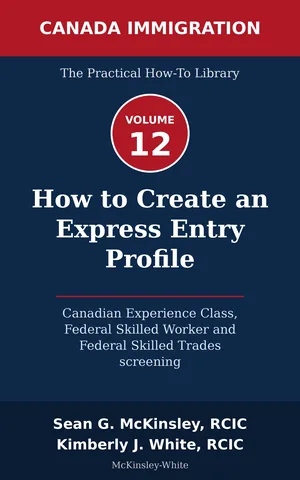
Volume 12 · Canada Immigration: The Practical How-To Library
How to Create an Express Entry Profile
Canadian Experience Class, Federal Skilled Worker and Federal Skilled Trades screening
For eligible skilled workers creating a profile in the Express Entry pool; profile entry, an invitation to apply and a permanent residence application are three different events. This book is a working companion. You can read it straight through, but you will learn more by applying each chapter to your own documentation.
Table of contents preview
- Part I — Seven decisions that make an application work
- Chapter 1. Select the eligible federal program
- Chapter 2. Classify NOC from duties
- Chapter 3. Book accepted language testing
- Chapter 4. Assess education and ECA
- Chapter 5. Calculate funds and CRS
- Chapter 6. Create and submit the profile
- Chapter 7. Update and watch the pool
- Part II — The evidence workshop
- Part III — Preventable refusals, delays and losses of status
- Part IV — An anonymized practice exercise
- Part V — Which forms might apply?
- Part VI — Frequently asked questions
- Part VII — The submission and follow-up audit
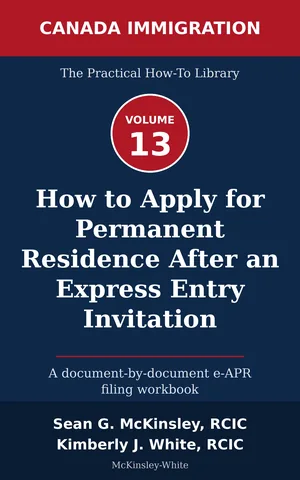
Volume 13 · Canada Immigration: The Practical How-To Library
How to Apply for Permanent Residence After an Express Entry Invitation
A document-by-document e-APR filing workbook
For candidates who have received an actual invitation to apply (ITA) under Express Entry. This is the application stage, not a lesson in entering the pool. This book is a working companion. You can read it straight through, but you will learn more by applying each chapter to your own documentation.
Table of contents preview
- Part I — Seven decisions that make an application work
- Chapter 1. Read the invitation and deadline
- Chapter 2. Reconcile the profile with reality
- Chapter 3. Create a document evidence matrix
- Chapter 4. Prepare persuasive employment proof
- Chapter 5. Disclose travel, family and history
- Chapter 6. Upload, sign and pay
- Chapter 7. Preserve proof and respond to requests
- Part II — The evidence workshop
- Part III — Preventable refusals, delays and losses of status
- Part IV — An anonymized practice exercise
- Part V — Which forms might apply?
- Part VI — Frequently asked questions
- Part VII — The submission and follow-up audit
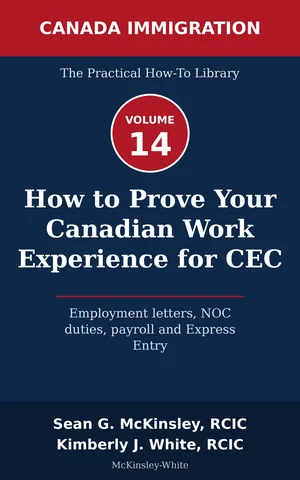
Volume 14 · Canada Immigration: The Practical How-To Library
How to Prove Your Canadian Work Experience for CEC
Employment letters, NOC duties, payroll and Express Entry
For Express Entry candidates relying on Canadian skilled employment and preparing evidence for Canadian Experience Class (CEC). This book is a working companion. You can read it straight through, but you will learn more by applying each chapter to your own documentation.
Table of contents preview
- Part I — Seven decisions that make an application work
- Chapter 1. Confirm legal Canadian work
- Chapter 2. Map every job chronologically
- Chapter 3. Match NOC using real duties
- Chapter 4. Calculate qualifying experience
- Chapter 5. Request a detailed reference letter
- Chapter 6. Build secondary proof
- Chapter 7. Prepare submission-ready reconciliation
- Part II — The evidence workshop
- Part III — Preventable refusals, delays and losses of status
- Part IV — An anonymized practice exercise
- Part V — Which forms might apply?
- Part VI — Frequently asked questions
- Part VII — The submission and follow-up audit
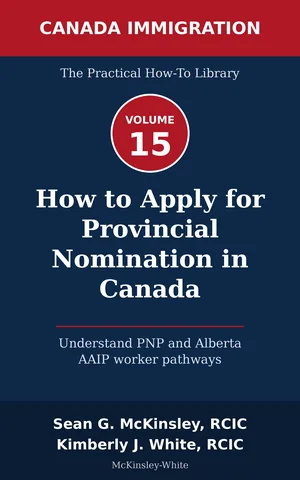
Volume 15 · Canada Immigration: The Practical How-To Library
How to Apply for Provincial Nomination in Canada
Understand PNP and Alberta AAIP worker pathways
For people considering a provincial nominee program, including Express Entry-linked and non-Express Entry routes; each province controls distinct current intake and criteria. This book is a working companion. You can read it straight through, but you will learn more by applying each chapter to your own documentation.
Table of contents preview
- Part I — Seven decisions that make an application work
- Chapter 1. Find the actual open stream
- Chapter 2. Confirm federal and provincial fit
- Chapter 3. Assess genuine employer support
- Chapter 4. Submit interest or application
- Chapter 5. Monitor province-specific conditions
- Chapter 6. Apply federally after nomination
- Chapter 7. Keep temporary status valid
- Part II — The evidence workshop
- Part III — Preventable refusals, delays and losses of status
- Part IV — An anonymized practice exercise
- Part V — Which forms might apply?
- Part VI — Frequently asked questions
- Part VII — The submission and follow-up audit
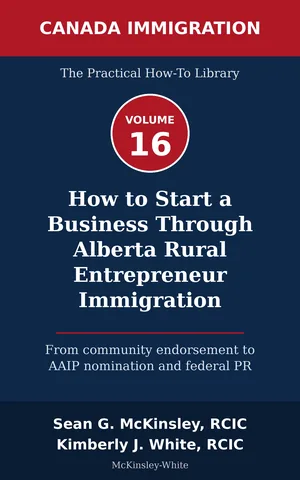
Volume 16 · Canada Immigration: The Practical How-To Library
How to Start a Business Through Alberta Rural Entrepreneur Immigration
From community endorsement to AAIP nomination and federal PR
For prospective entrepreneurs studying the Alberta Advantage Immigration Program Rural Entrepreneur Stream; a fact-checked business plan and active community engagement are not optional. This book is a working companion. You can read it straight through, but you will learn more by applying each chapter to your own documentation.
Table of contents preview
- Part I — Seven decisions that make an application work
- Chapter 1. Check the current stream and candidate profile
- Chapter 2. Understand the community's priorities
- Chapter 3. Develop a viable business concept
- Chapter 4. Prepare EOI and supporting evidence
- Chapter 5. Complete business application after invitation
- Chapter 6. Operate under the signed agreement
- Chapter 7. Demonstrate performance, then pursue nomination and PR
- Part II — The evidence workshop
- Part III — Preventable refusals, delays and losses of status
- Part IV — An anonymized practice exercise
- Part V — Which forms might apply?
- Part VI — Frequently asked questions
- Part VII — The submission and follow-up audit
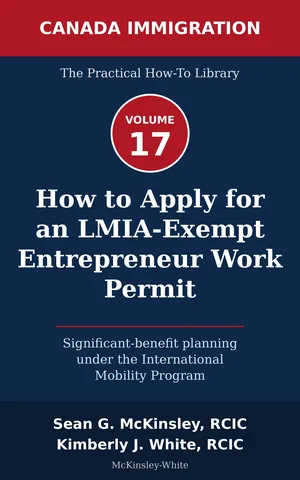
Volume 17 · Canada Immigration: The Practical How-To Library
How to Apply for an LMIA-Exempt Entrepreneur Work Permit
Significant-benefit planning under the International Mobility Program
For founders considering LMIA-exempt Canadian work authorization, including C11-type significant-benefit arguments; eligibility and current codes must be confirmed from live IRCC guidance. This book is a working companion. You can read it straight through, but you will learn more by applying each chapter to your own documentation.
Table of contents preview
- Part I — Seven decisions that make an application work
- Chapter 1. Identify a real exemption
- Chapter 2. Document active ownership and management
- Chapter 3. Define the significant benefit
- Chapter 4. Build an implementation plan
- Chapter 5. Complete employer-side obligations where applicable
- Chapter 6. Submit a complete applicant work-permit file
- Chapter 7. Operate within authorization and keep PR separate
- Part II — The evidence workshop
- Part III — Preventable refusals, delays and losses of status
- Part IV — An anonymized practice exercise
- Part V — Which forms might apply?
- Part VI — Frequently asked questions
- Part VII — The submission and follow-up audit
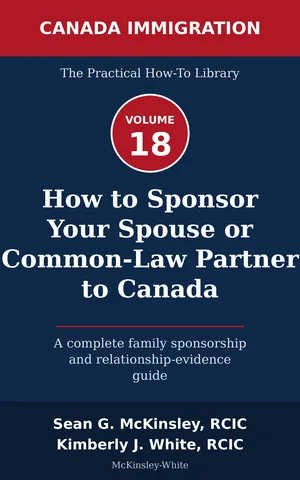
Volume 18 · Canada Immigration: The Practical How-To Library
How to Sponsor Your Spouse or Common-Law Partner to Canada
A complete family sponsorship and relationship-evidence guide
For Canadian citizens or permanent residents sponsoring a spouse, common-law partner or eligible conjugal partner, inside or outside Canada as the current program allows. This book is a working companion. You can read it straight through, but you will learn more by applying each chapter to your own documentation.
Table of contents preview
- Part I — Seven decisions that make an application work
- Chapter 1. Choose the correct family class and category
- Chapter 2. Confirm sponsor and applicant eligibility
- Chapter 3. Build a relationship chronology
- Chapter 4. Gather proof of genuine shared life
- Chapter 5. Complete current sponsor and PR forms
- Chapter 6. Manage temporary status separately
- Chapter 7. Submit, preserve and respond
- Part II — The evidence workshop
- Part III — Preventable refusals, delays and losses of status
- Part IV — An anonymized practice exercise
- Part V — Which forms might apply?
- Part VI — Frequently asked questions
- Part VII — The submission and follow-up audit
Volume 19 · Canada Immigration: The Practical How-To Library
How to Sponsor a Child, Parent or Grandparent
Family sponsorship forms, eligibility and intake reality
For families evaluating dependent-child sponsorship and the parent/grandparent program; parent/grandparent intake is invitation-based and should not be represented as perpetually open. This book is a working companion. You can read it straight through, but you will learn more by applying each chapter to your own documentation.
Table of contents preview
- Part I — Seven decisions that make an application work
- Chapter 1. Identify the correct relative and program
- Chapter 2. Check current intake before filing
- Chapter 3. Confirm sponsor obligations
- Chapter 4. Establish identities and family relationships
- Chapter 5. Complete appropriate sponsored-family forms
- Chapter 6. Prepare temporary alternatives if needed
- Chapter 7. Submit only when eligible, then track
- Part II — The evidence workshop
- Part III — Preventable refusals, delays and losses of status
- Part IV — An anonymized practice exercise
- Part V — Which forms might apply?
- Part VI — Frequently asked questions
- Part VII — The submission and follow-up audit
Volume 20 · Canada Immigration: The Practical How-To Library
How to Apply for Canadian Citizenship as an Adult
Physical presence, passports, taxes, language and oath
For adult permanent residents preparing a citizenship grant under the current Canadian Citizenship Act and IRCC application process. This book is a working companion. You can read it straight through, but you will learn more by applying each chapter to your own documentation.
Table of contents preview
- Part I — Seven decisions that make an application work
- Chapter 1. Test eligibility before opening forms
- Chapter 2. Calculate physical presence precisely
- Chapter 3. Reconcile the five-year history
- Chapter 4. Confirm language proof
- Chapter 5. Prepare IDs, passports and photos
- Chapter 6. Choose online or paper appropriately
- Chapter 7. Submit and track future steps
- Part II — The evidence workshop
- Part III — Preventable refusals, delays and losses of status
- Part IV — An anonymized practice exercise
- Part V — Which forms might apply?
- Part VI — Frequently asked questions
- Part VII — The submission and follow-up audit
Volume 21 · Canada Immigration: The Practical How-To Library
How to Apply for Canadian Citizenship for Children
Minor grants, citizenship certificates and family applications
For families handling minor citizenship grants under the applicable subsection and separately determining whether a child is already a Canadian citizen and needs proof. This book is a working companion. You can read it straight through, but you will learn more by applying each chapter to your own documentation.
Table of contents preview
- Part I — Seven decisions that make an application work
- Chapter 1. Separate citizenship proof from a grant
- Chapter 2. Identify the correct minor category
- Chapter 3. Check parent or guardian authority
- Chapter 4. Collect identity, PR and family records
- Chapter 5. Prepare minor-specific photos and forms
- Chapter 6. Coordinate a family submission
- Chapter 7. Track the case and certificates
- Part II — The evidence workshop
- Part III — Preventable refusals, delays and losses of status
- Part IV — An anonymized practice exercise
- Part V — Which forms might apply?
- Part VI — Frequently asked questions
- Part VII — The submission and follow-up audit
Volume 22 · Canada Immigration: The Practical How-To Library
How to Prepare a Humanitarian and Compassionate Application
Evidence, establishment and the best interests of children
For individuals exploring permanent residence on humanitarian and compassionate (H&C) grounds, a discretionary remedy requiring careful individualized professional screening. This book is a working companion. You can read it straight through, but you will learn more by applying each chapter to your own documentation.
Table of contents preview
- Part I — Seven decisions that make an application work
- Chapter 1. Screen eligibility and exclusions
- Chapter 2. Identify the actual hardship factors
- Chapter 3. Give children's interests distinct attention
- Chapter 4. Create a documented establishment chronology
- Chapter 5. Prepare careful personal statements
- Chapter 6. Use the correct PR process and forms
- Chapter 7. Understand protections and next steps
- Part II — The evidence workshop
- Part III — Preventable refusals, delays and losses of status
- Part IV — An anonymized practice exercise
- Part V — Which forms might apply?
- Part VI — Frequently asked questions
- Part VII — The submission and follow-up audit
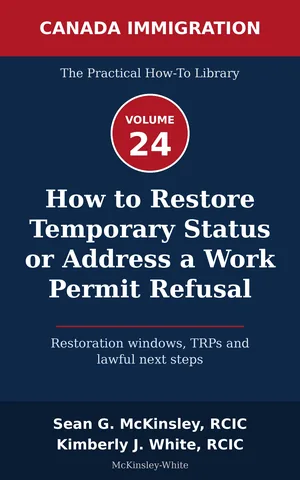
Volume 24 · Canada Immigration: The Practical How-To Library
How to Restore Temporary Status or Address a Work Permit Refusal
Restoration windows, TRPs and lawful next steps
For temporary residents facing an expiring or expired authorization, a refusal or possible temporary resident permit (TRP); this is a risk-triage guide, not a promise of reinstatement. This book is a working companion. You can read it straight through, but you will learn more by applying each chapter to your own documentation.
Table of contents preview
- Part I — Seven decisions that make an application work
- Chapter 1. Establish exact present status
- Chapter 2. Distinguish maintained status from restoration
- Chapter 3. Check whether restoration is available
- Chapter 4. Assess the work or study basis again
- Chapter 5. Examine TRP only when legally appropriate
- Chapter 6. Consider reconsideration or other remedies
- Chapter 7. Submit accurately and stop unauthorized activities
- Part II — The evidence workshop
- Part III — Preventable refusals, delays and losses of status
- Part IV — An anonymized practice exercise
- Part V — Which forms might apply?
- Part VI — Frequently asked questions
- Part VII — The submission and follow-up audit
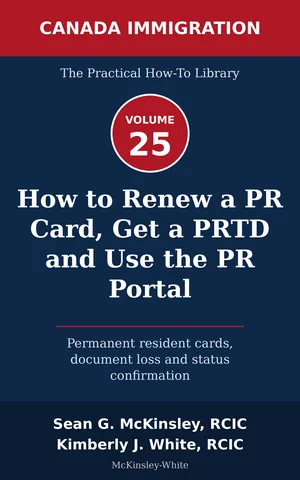
Volume 25 · Canada Immigration: The Practical How-To Library
How to Renew a PR Card, Get a PRTD and Use the PR Portal
Permanent resident cards, document loss and status confirmation
For permanent residents dealing with PR-card expiry, replacement, travel-document needs and routine permanent-residence portal communications. This book is a working companion. You can read it straight through, but you will learn more by applying each chapter to your own documentation.
Table of contents preview
- Part I — Seven decisions that make an application work
- Chapter 1. Separate PR status from PR card validity
- Chapter 2. Determine which application is needed
- Chapter 3. Review residency obligation evidence
- Chapter 4. Prepare current ID and photo evidence
- Chapter 5. Handle lost, stolen or destroyed cards
- Chapter 6. Use official PR confirmation communications carefully
- Chapter 7. Plan travel and delivery timing
- Part II — The evidence workshop
- Part III — Preventable refusals, delays and losses of status
- Part IV — An anonymized practice exercise
- Part V — Which forms might apply?
- Part VI — Frequently asked questions
- Part VII — The submission and follow-up audit
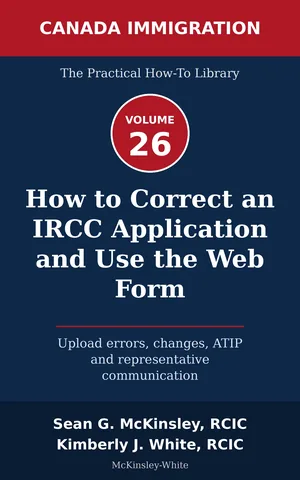
Volume 26 · Canada Immigration: The Practical How-To Library
How to Correct an IRCC Application and Use the Web Form
Upload errors, changes, ATIP and representative communication
For applicants and authorized representatives managing changes or errors in submitted immigration or citizenship files. This book is a working companion. You can read it straight through, but you will learn more by applying each chapter to your own documentation.
Table of contents preview
- Part I — Seven decisions that make an application work
- Chapter 1. Identify the exact discrepancy
- Chapter 2. Classify the urgency and channel
- Chapter 3. Draft a clear correction note
- Chapter 4. Collect support for the correct facts
- Chapter 5. Submit through the sanctioned method
- Chapter 6. Use information requests responsibly
- Chapter 7. Track replies and escalate lawfully
- Part II — The evidence workshop
- Part III — Preventable refusals, delays and losses of status
- Part IV — An anonymized practice exercise
- Part V — Which forms might apply?
- Part VI — Frequently asked questions
- Part VII — The submission and follow-up audit
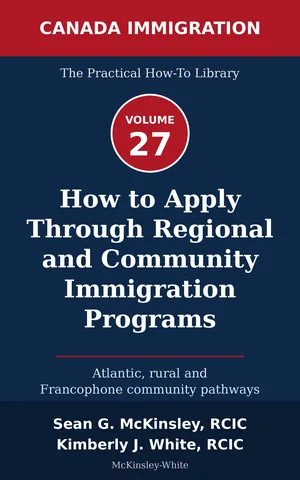
Volume 27 · Canada Immigration: The Practical How-To Library
How to Apply Through Regional and Community Immigration Programs
Atlantic, rural and Francophone community pathways
For qualified readers evaluating federal regional economic programs, including Atlantic Immigration Program and the Rural or Francophone Community Immigration Pilots. This book is a working companion. You can read it straight through, but you will learn more by applying each chapter to your own documentation.
Table of contents preview
- Part I — Seven decisions that make an application work
- Chapter 1. Find the current available program
- Chapter 2. Establish applicant eligibility
- Chapter 3. Locate a genuinely eligible employer
- Chapter 4. Secure required endorsement or recommendation
- Chapter 5. Prepare the federal PR application
- Chapter 6. Consider work authorization if eligible
- Chapter 7. Keep track of community commitments
- Part II — The evidence workshop
- Part III — Preventable refusals, delays and losses of status
- Part IV — An anonymized practice exercise
- Part V — Which forms might apply?
- Part VI — Frequently asked questions
- Part VII — The submission and follow-up audit
Volume 28 · Canada Immigration: The Practical How-To Library
How to Complete Canadian Immigration IMM Forms Correctly
The master form-by-form accuracy and signature companion
For readers who need a practical reference to identifying, completing, validating, signing and filing the right current IMM or CIT form for their application. This is an index and workflow guide, not a substitute for official forms. This book is a working companion.
Table of contents preview
- Part I — Seven decisions that make an application work
- Chapter 1. Start with the actual application pathway
- Chapter 2. Separate IMM, CIT, IRB and other forms
- Chapter 3. Use current versions from Canada.ca
- Chapter 4. Build a single source of truthful facts
- Chapter 5. Complete all required sections and schedules
- Chapter 6. Validate, sign and authorize representation
- Chapter 7. Run a pre-submission technical audit
- Part II — The evidence workshop
- Part III — Preventable refusals, delays and losses of status
- Part IV — An anonymized practice exercise
- Part V — Which forms might apply?
- Part VI — Frequently asked questions
- Part VII — The submission and follow-up audit
© 2026 Sean G McKinsley and Kimberly J White. All rights reserved. Amazon and Kindle are trademarks of Amazon.com, Inc. or its affiliates.